Showing posts with label deer creek. Show all posts

Monday, March 10, 2014

Dipping for Smelt


By Spider Rybaak

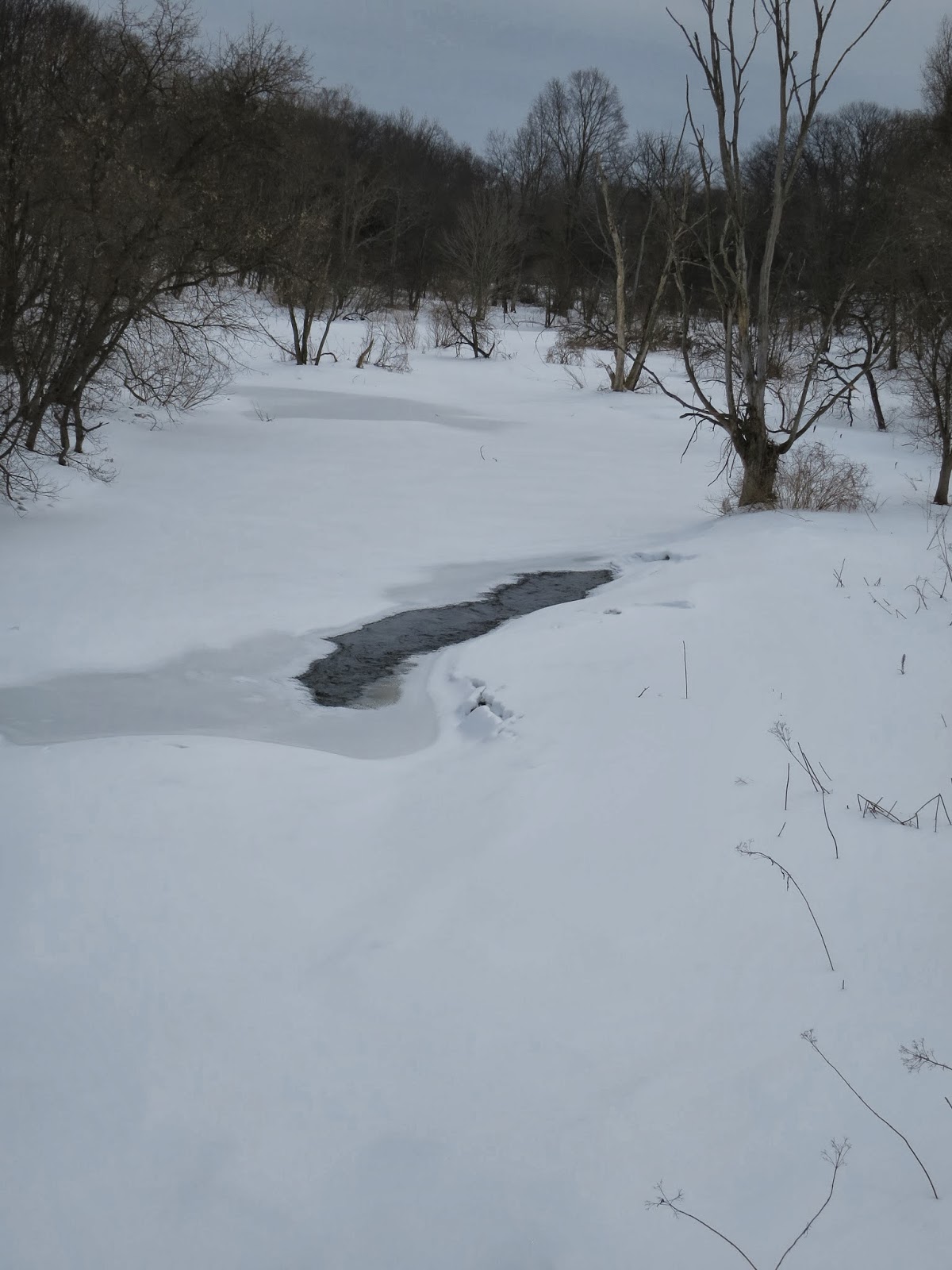
 Grindstone Creek from the NYS Rte. 3 bridge, March 5; gotta wait until ice-out to dip.

Back in the early 1960s, environmental pollution was rampant. Lake Erie was so dirty, authorities began drafting a death certificate. Lake Ontario was much deeper so it could swallow more stuff, but it was limping along on its last leg, too; fish populations were down to a fraction of what they used to be.

But there was hope.

By the middle of the decade, strict environmental laws were passed and enforced. Nature responded quickly, improving the water in the Lower Great Lakes to such a degree that fish numbers took off. Since it takes a while for game fish to grow to legal size, they were slow in coming around; but bait fish populations exploded.

That was good…and bad.

First the good: smelt reached such incredible numbers, guys dipping for them in the mouth of the Salmon River could fill 5-gallon buckets with their eyes closed. On skinny creeks like Deer and Little Sandy, conscientious anglers dipped gently, carefully to avoid crushing the smelt below the net’s rim or hurting those off to the sides.

The bad: alewives thrived, too. Boney and tasting like swamp mud, they were avoided by man. Unsightly winter kill lined beaches around the lake and the authorities decided to bring the lake back into balance by stocking voracious lake trout, king and coho salmon.

It worked. The salmonids swam around with mouths wide open, growing huge. Smelt numbers dropped incredibly. Dave Wood, owner of Woody’s Tackle on NYS Rte. 3, says dipping for them got so bad by the late 70s, he stopped going.

Fran Daher, over at North Syracuse’s Mickey’s Live Bait and Tackle concurs. “We used to sell dozens of dipping nets annually in the 70s, now we’re lucky if we sell a couple- three a year. Smelting has become a dead art,” he adds.

But it shouldn’t be. Word coming out of the western part of the lake has it that smelt numbers are rebounding. Fran Daher’s admission that he’s only selling a few nets a year suggests someone’s getting smelt around here. After all, argues cousin Staash, “these guys ain’t buying dip nets to catch butterflies; they’re getting smelt but they ain’t talking about it.”

Brian Weidel, of the USGS, Great Lakes Science Center, says” “From what I hear, spring 2011 was a good year for smelting, at least in the western NY tributaries. This MAY have been associated with slightly higher smelt abundance in the lake in 2010. Since then the population has dropped, which is usual for the species. Their abundance tends to naturally cycle.”

However, Weidel isn’t so quick to blame the drop in smelt populations on predators: “One thing that is important for anglers and the public to recognize is the overall productivity of the lake has decreased (which is a good thing) because of the Clean Water Act and other important legislation that reduced pollutants in the lake,” he claims.

Since smelt numbers are cyclical, there’s a good chance this year’s run will be a good one. The only way to find out if they’re running up Oswego County’s Lake Ontario tributaries again is to go for ‘em.

The mouth of any tributary will do. Here’s some with good public access:

- Little Salmon River, County Route 40 or Mexico Point Drive, Texas, NY.
- Grindstone Creek, Selkirk Shores State Park, NYS Rte. 3, a couple miles south of Port Ontario.
- Deer Creek, Deer Creek Marsh Wildlife Management Area, NYS Rte. 3, a couple miles north of Port Ontario     

Going for these guys isn’t rocket science; all you gotta do is stand on the bank, dip and scoop. Dip nets come with long handles so you don’t have to stretch too much.

Woody claims [global warming notwithstanding]“This winter is like the ones we used to have, so the smelt won’t be running until April.”

And that’s reassuring, suggesting the weather is like smelt…cyclical.

Dave Wood, owner of Woody's Tackle Shop in Port Ontario, holding a smelt dipping net.


Friday, August 30, 2013

Training Gold


By Spider Rybaak

Gary and Kelsey.

Gary Fischer has been hunting birds for over 60 years. He’s been training dogs to retrieve for that long, too. He learned both from a beagle.

“When I was growing up,” explains the Central Square native, “I loved to hunt. But I didn’t know much about it. I didn’t know much about dogs, either. One day my beagle follows me into the field…and he knew a lot about both.”

Since then, Gary’s trained five golden retrievers, two Brittany spaniels and two pointers. As you can probably tell, he doesn’t do it professionally. Rather, he takes the family pet out, and, with a patience that would make Mother Teresa proud, teaches the pooch everything it needs to know to be his most valuable hunting asset…after his gun, of course.

“You have to start ‘em out immediately,” says Fischer. “In fact, breeders start the first step in the process, called socializing, by exposing the dog to people and different situations like playing with balls, chasing sticks and stuff.”

According to Fischer, the best time to pick up the puppy is when it’s about 7 to 8 weeks old. After you get to know and trust each other, you start training.

Fischer advises you field train 5 times a week—“don’t let the dog get bored”—and “obedience train” every day for about 10 minutes. “Repetition…repetition…repetition…,” he adds.

Fischer’s latest trainee is nine-month-old Kelsey. A golden retriever, she’s been studying under the master for about six months. Typically, class starts out in the fields on the north shore of Oneida Lake, followed by a little water work in an adjoining swamp.

On the day we go, Gary’s doing remedial work; something he calls breaking her to the shot.

“She’s not holding when the gun goes off or when she sees the game,” says Fisher.  “When a pheasant flushes or a duck flies into range, you want the dog to stay put, giving you a clear shot. If she jumps into the picture prematurely, she can get shot, scare off a second bird…a lot can happen. Secondly, you want the dog to stay put so it can see everything that’s happening,” he adds.

Arriving at the field, Kelsey’s anticipating everything, proving dogs have imagination. As Gary’s showing me how to insert the dummy onto the barrel of the launcher (it’s attached to a cylinder that fires a blank 22 cartridge; gas propels the dummy), Kelsey practically knocks me down trying to get at the thing. As they head out into the bush, she’s jumping at his every move, even before he gives me the hand signal to launch.

His first sign is for me to fire a simple blank.

Hearing the report, Kelsey tugs at the leash, trying to jump at her imaginary bird. Gary keeps her put.

Next, he signals me to launch a dummy.

This time Kelsey is surprisingly calm.  Gary issues gentle commands for her to hold and she stays put. When he says “out,” she takes off like someone fired a rocket under her butt and heads right for the spot in the grass where the dummy hit, mouths it and returns to her master.

After several more practice runs in the field, we head for a swamp. I launch 4 dummies and Kelsey retrieves each one immediately upon command. Surprisingly, I feel proud of her—so does Gary.

“OK, Spider, she can hunt. Let’s call it quits.”

We head back for the truck; each of us salivating over the thought of duck season being just around the corner.

Fischer offers the following advice:

 Any good working retriever can make a great family dog; most family dogs will not make good hunting dogs.

If you’re thinking of getting a pup, get it from a breeder with proven credentials like hunt test titles and field trial points. Mexico, NY’s Adirondac Goldens (www.adirondac-goldens.com), has a national reputation for breeding truly great dogs.

For additional information, check out the Finger Lakes Retriever Club (www.fingerlakesretriever.org) and The Golden Retriever Club of Central New York (www.grccny.org).

Good places to train your dog in Oswego County include:

Three Mile Bay/Big Bay Wildlife Management Area, Toad Harbor Road (off NY 49), West Monroe;
Happy Valley WMA, NY 104 (between CR 22 and NY 13), Town of Parish;
Deer Creek WMA, NY 3, two miles north of Port Ontario.

Oswego County’s Fishing and Hunting Guide contains a map showing the locations of these and several more state forests and WMAs: www.visitoswegocounty.com.

Fischer loading a dummy on the launcher.

Kelsey locating the dummy.

Delivering the dummy.